A good painkiller recipe should taste tropical, creamy, and refreshing rather than overly sweet. This classic rum cocktail combines dark or aged rum with pineapple juice, orange juice, and cream of coconut, then finishes with freshly grated nutmeg. It is easy to make at home, but the balance matters: too much coconut can hide the rum, while too much citrus can make the drink sharp. The recipe below gives you a smooth starting point and practical ways to adjust it to your taste.
Despite its name, the Painkiller is a cocktail, not a remedy for physical pain. It is an alcoholic drink, so enjoy it slowly, serve food alongside it, and never drive after drinking.
Painkiller Recipe: Ingredients and Easy Ratios
This version makes one generous cocktail. Use chilled ingredients wherever possible, especially if you plan to shake the drink briefly rather than blend it.
- 60 ml dark or aged rum
- 120 ml pineapple juice
- 30 ml orange juice, preferably freshly squeezed
- 30 ml cream of coconut
- Crushed ice, for serving
- Freshly grated nutmeg, for garnish
- An orange slice or pineapple wedge, optional
The familiar structure is easy to remember: two parts pineapple juice, one part rum, and smaller portions of orange juice and coconut. You can increase the rum slightly for a stronger drink, or add a splash of pineapple juice if you prefer a lighter, fruit-forward version.
What kind of rum works best?
Dark rum gives the drink a deeper molasses character and stands up well to the sweet fruit and coconut. An aged rum can be slightly drier and more layered. You do not need an expensive bottle for this recipe, but a rum with noticeable vanilla, caramel, spice, or oak notes will make the finished cocktail more interesting.
White rum can work in a pinch, although the result is lighter and less robust. Spiced rum is another option, but check the sweetness before adding extra coconut. If you enjoy comparing rum-based drinks, the bright citrus profile of this balanced Sidecar recipe offers a useful contrast.
Cream of coconut versus coconut cream
These two ingredients are not interchangeable. Cream of coconut is a sweetened coconut product made for drinks and desserts, while coconut cream is generally unsweetened and thicker. Using coconut cream without adding sugar will produce a flatter, less rounded cocktail. If cream of coconut is unavailable, use coconut cream with a small amount of simple syrup, tasting carefully as you go.
How to Make a Painkiller Cocktail at Home
- Chill the glass. Place a rocks glass or large tumbler in the freezer for a few minutes, or fill it with ice while preparing the drink.
- Combine the ingredients. Add the rum, pineapple juice, orange juice, and cream of coconut to a cocktail shaker or sealed jar.
- Shake thoroughly. Add a small handful of ice and shake for about 10 seconds. This helps distribute the thick coconut ingredient and cools the fruit juices.
- Pour over crushed ice. Fill the chilled glass with crushed ice and strain or pour the mixture over it. Give the drink a gentle stir.
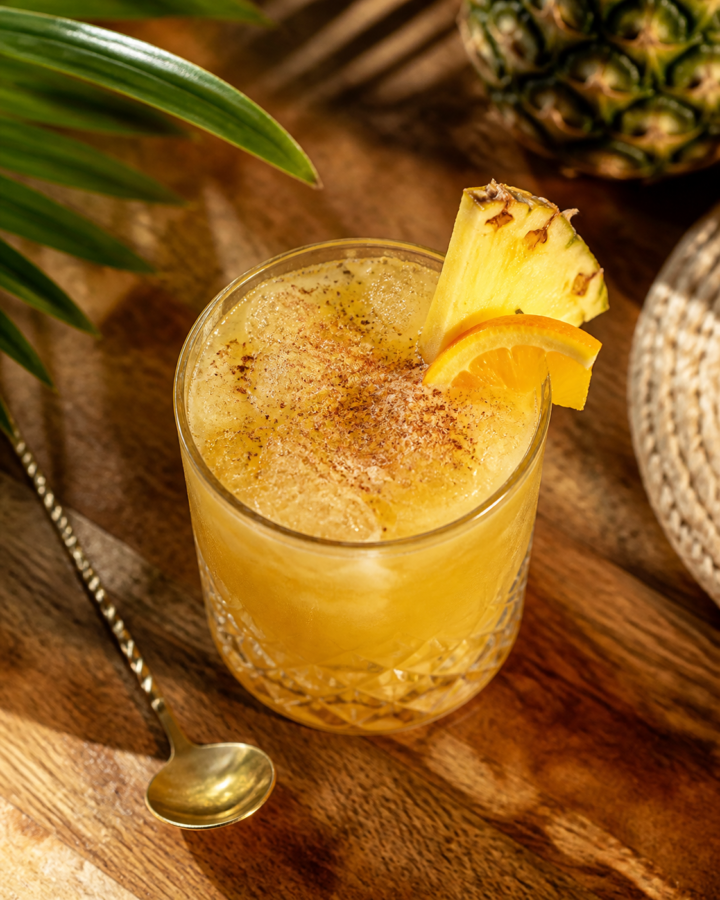
- Garnish and serve. Finish with freshly grated nutmeg and, if desired, an orange slice or pineapple wedge.
If you do not have a shaker, add everything to the glass and stir vigorously with a bar spoon. The texture may be a little less frothy, but the flavor will still be enjoyable. For a colder, smoother texture, you can blend the ingredients with ice, though blending may dilute the drink more quickly.
How to Balance the Flavor
The best painkiller recipe is not just about following measurements; it is also about tasting and adjusting. Pineapple juice can vary from tart to very sweet, and cream of coconut brands differ in thickness and sugar content. Make one drink using the suggested ratios, then make small changes rather than adding large amounts at once.
- Too sweet: Add a little more orange juice, a small splash of lime juice, or increase the rum slightly.
- Too strong: Add pineapple juice and a little ice, then stir again.
- Too thick: Use less cream of coconut or add a splash of juice.
- Too sharp: Add a small amount of cream of coconut or use a sweeter pineapple juice.
- Not coconut-forward enough: Add another teaspoon of cream of coconut and shake again.
Lime juice is not essential in the traditional-style build, but a small amount can add freshness when the drink tastes heavy. Use it sparingly so it does not overpower the pineapple and coconut.
Serving Ideas, Garnishes, and Variations
Crushed ice is a natural choice because it keeps the drink cold and gives it a relaxed, tropical appearance. A tall glass works well if you want a longer drink, while a rocks glass creates a richer, more concentrated presentation. Fresh nutmeg is worth using because its warm aroma cuts through the sweetness as you take each sip.
For a less sweet version, reduce the cream of coconut to 20 ml and add a little extra orange juice. To create a stronger party-style serve, keep the fruit balance the same and increase the rum carefully rather than simply pouring more into the glass. You can also make a pitcher by multiplying the ingredients, mixing them without ice, and chilling the batch before serving over fresh crushed ice.
Do not add ice to a pitcher too early, as it will dilute the mixture. Stir the batch before pouring, and keep the garnish simple so the drink remains easy to serve. For more ideas involving rich, dessert-like flavors, explore these coffee cocktails and serving tips.
How the Painkiller Compares with Other Tropical Cocktails
The Painkiller is fruitier and creamier than many rum cocktails. A Daiquiri relies on rum, lime, and sugar for a crisp, tart profile, while a Piña Colada is usually more coconut-heavy and often blended. The Painkiller sits between those styles: pineapple provides the main fruit character, orange adds lift, and coconut rounds out the texture.
Its history and changing proportions are discussed in the Wikipedia entry for the Painkiller cocktail. Recipes can differ by bar and by preference, so the most useful approach is to treat the measurements here as a dependable foundation rather than an unchangeable rule.
Final Tips for a Better Homemade Painkiller
Use good-quality pineapple juice, fresh orange juice when available, and a rum that you would be happy to sip. Shake well enough to combine the coconut, and always taste before making a second drink so you can adjust the sweetness or strength. A clean garnish and plenty of cold, fresh ice make a noticeable difference.
If you enjoy creamy cocktails but want a coffee-led alternative, this White Russian recipe is another easy option. Whichever drink you choose, serve responsibly and remember that the name “Painkiller” describes the cocktail’s character—not a medical effect.