Coffee cocktails bring together two dependable pleasures: the roasted richness of coffee and the warmth of a well-chosen spirit. They can be creamy and dessert-like, sharp and refreshing, or strong enough to serve as an after-dinner drink. The best coffee cocktails are not simply sweet drinks with caffeine added; they balance bitterness, aroma, alcohol, dilution and texture. With a few ingredients and the right method, you can make an impressive coffee drink at home without specialist bar equipment.
What makes coffee cocktails work?
Coffee has natural bitterness, toasted aromas and a slight acidity. Those qualities pair especially well with spirits that have vanilla, caramel, spice or dark-fruit notes. Whiskey, rum, vodka, brandy and coffee liqueur are all useful starting points, but each creates a different style of drink.
Freshly brewed coffee gives a more aromatic result, while chilled espresso creates a concentrated base for shaken drinks. Cold brew is smoother and usually less sharp, making it a good choice for tall, refreshing serves. Instant coffee can work in a pinch, particularly in creamy recipes, but use a strong preparation so the coffee does not disappear behind the other ingredients.
- For bitterness: choose a darker roast, espresso or a small amount of coffee liqueur.
- For sweetness: use simple syrup, demerara syrup, condensed milk or a sweet liqueur.
- For body: add cream, milk, coconut cream or a well-shaken foam.
- For brightness: use orange zest, a small amount of citrus or a pinch of salt.
Balance matters more than expensive ingredients. If a drink tastes harsh, it may need dilution or sweetness rather than another pour of alcohol. If it tastes flat, a little fresh coffee, orange aroma or salt can make the flavours more distinct.
Essential ingredients for coffee cocktails
Choose the right coffee
For hot drinks, brew the coffee just before mixing and keep the quantity controlled. Too much hot liquid can quickly melt ice and make a shaken cocktail watery. For cold drinks, allow brewed coffee to cool before adding it to a shaker. Pouring hot coffee over ice often creates excessive dilution and weakens the drink.
Espresso is popular because it is concentrated and carries a strong roasted aroma. Cold brew is more forgiving if you prefer a smoother, less bitter cocktail. A medium or medium-dark roast is often versatile, while very smoky dark roasts can dominate delicate spirits.
Match the spirit to the style
Vodka keeps the coffee at the centre and works well in creamy drinks. Whiskey adds oak, spice and caramel, creating a warmer, more structured cocktail. Dark or aged rum brings molasses and dried-fruit notes, while brandy gives a round, warming finish. Coffee liqueur adds sweetness and reinforces the main flavour, but reduce other sweeteners when using it.
Dairy and non-dairy ingredients also change the character of the drink. Heavy cream creates a rich float or soft texture, milk keeps the drink lighter, and oat or coconut-based alternatives can add their own flavour. Always consider whether the chosen milk can handle hot coffee without separating.
Three easy coffee cocktails to make at home
1. Classic espresso and vodka shaker
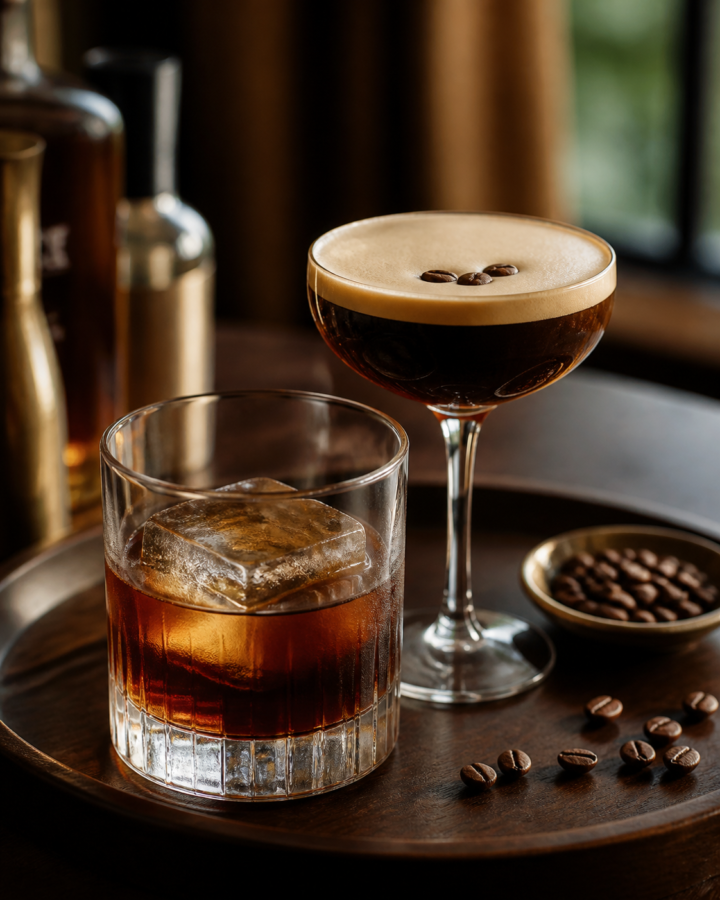
This is a clean, modern coffee cocktail with a silky foam on top. Add 45 ml vodka, 30 ml freshly brewed and cooled espresso, 20 ml coffee liqueur and 10 ml simple syrup to a shaker filled with ice. Shake hard for 12 to 15 seconds, then double-strain into a chilled coupe or martini glass. Garnish with three coffee beans or a light dusting of grated chocolate.
Adjust the syrup according to the coffee liqueur and your preferred sweetness. A longer, more vigorous shake helps create the characteristic foam and chills the drink quickly.
2. Creamy coffee and rum drink
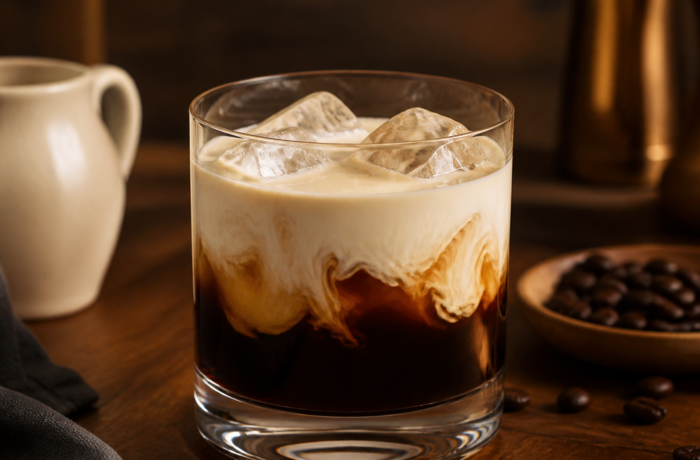
For a relaxed after-dinner serve, combine 30 ml dark rum, 25 ml coffee liqueur and 60 ml chilled coffee in a rocks glass filled with ice. Stir briefly, then float 30 ml lightly whipped cream over the back of a spoon. Finish with grated nutmeg or a little cocoa powder.
If you enjoy rich, smooth drinks, try this style alongside the White Russian recipe and guide. The key difference is that rum introduces a deeper molasses character, while vodka keeps a creamy coffee drink more neutral.
3. Cold brew coffee highball
Fill a tall glass with ice and add 45 ml bourbon or aged rum, 60 ml cold brew coffee and 10 ml demerara syrup. Stir gently, top with chilled soda water and garnish with an orange twist. This is one of the easiest coffee cocktails to serve at a gathering because it is refreshing, quick to assemble and not overly heavy.
For a brighter variation, use a little less syrup and add an expressed orange peel. You can also replace the soda water with tonic, although the resulting drink will be more bitter and aromatic.
Hot coffee cocktails and after-dinner serves
Hot coffee cocktails are ideal when you want a comforting drink with a strong aroma. A simple Irish-style serve uses hot coffee, whiskey, sugar and a gently floated layer of cream. The cream should be lightly whipped so it sits on the surface without becoming too stiff to sip through.
Another option is a brandy coffee: stir hot coffee with a small measure of brandy and a little brown sugar, then add a restrained amount of cream. Orange zest, cinnamon or grated chocolate can provide aroma without making the drink excessively sweet. For more background on the broader tradition of coffee mixed with spirits, see this overview of liqueur coffee.
Serve hot coffee cocktails in a pre-warmed glass or mug. Warm the vessel with hot water first, discard the water, and then build the drink. This small step helps the cocktail stay hot for longer and reduces the shock of adding boiling liquid to cold glassware.
How to improve the flavour and presentation
- Chill glassware: Place coupe or martini glasses in the freezer for a short time before shaking a cold cocktail.
- Control dilution: Use plenty of solid ice and shake firmly rather than shaking slowly with a few melting cubes.
- Measure sweeteners: Coffee liqueurs vary considerably in sweetness, so taste and adjust instead of automatically adding syrup.
- Use aroma as garnish: Orange peel, grated nutmeg, cocoa and coffee beans contribute more than a decorative fruit wedge.
- Keep cream fresh: Whip it lightly and add it shortly before serving for the cleanest texture.
Glassware also affects the experience. A coupe makes a shaken espresso drink feel polished, a rocks glass suits creamy or spirit-forward recipes, and a tall highball emphasizes freshness and carbonation. If you are serving several cocktails, label the style clearly for guests and offer a non-alcoholic coffee option as well.
Pairing coffee cocktails with food
Rich coffee drinks pair naturally with desserts containing chocolate, caramel, vanilla or toasted nuts. A less sweet cold brew highball can work with grilled foods, spicy snacks or salty appetisers because its bitterness and carbonation refresh the palate. Creamy versions are best served in smaller portions after a meal.
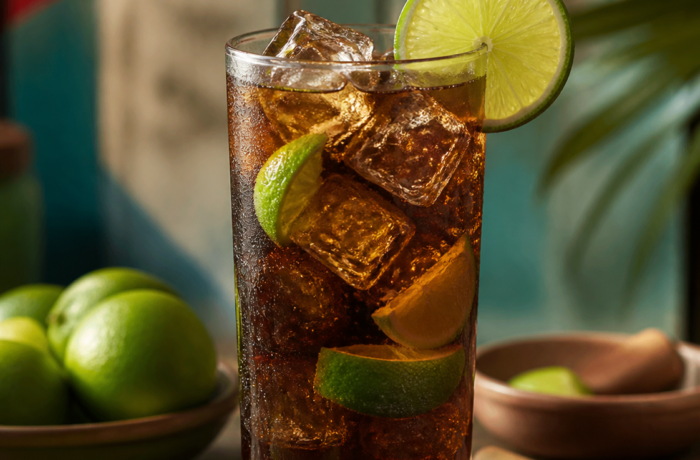
When planning a mixed drinks menu, balance a heavy coffee cocktail with a lighter, citrus-led option. A rum-and-cola serve such as this Cuba Libre cocktail guide can provide a brighter contrast through lime and carbonation.
Final tips for better coffee cocktails
Start with a modest amount of sugar and add more only after tasting. Use coffee that you would happily drink on its own, because poor-quality or stale coffee becomes more noticeable when mixed with alcohol. Chill coffee before shaking, measure every ingredient, and keep garnishes simple.
Most importantly, treat coffee cocktails as balanced mixed drinks rather than strong coffee. Serve them in sensible portions, drink slowly and never drive after drinking alcohol. Once you understand how coffee, sweetness, spirit and dilution interact, you can create countless variations with ingredients already in your kitchen.