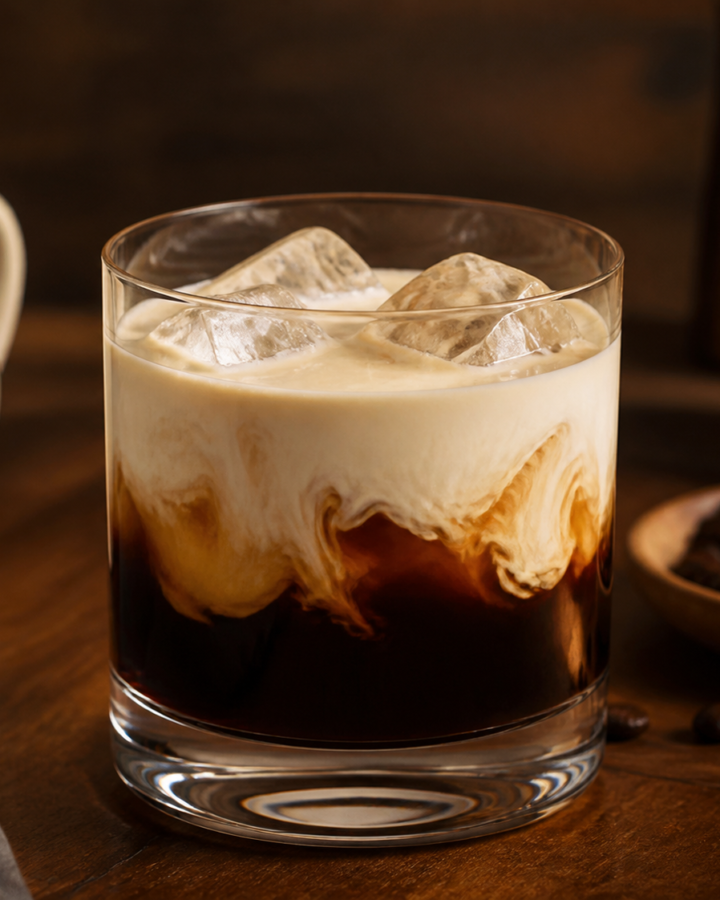
A good white russian recipe should be simple, balanced, and easy to repeat. This classic coffee cocktail needs only vodka, coffee liqueur, cream, and ice, making it a useful choice when you want a rich after-dinner drink without complicated equipment. The result is smooth and lightly sweet, with a gentle coffee flavour and a creamy finish.
Although it looks indulgent, the drink is built from straightforward proportions. You can stir it for an even, silky texture or pour the cream over the top for a striking layered appearance. Below, you will find the classic method, ingredient guidance, variations, and practical serving tips for making this cocktail at home.
White Russian Recipe: Ingredients and Basic Ratio
The traditional formula is easy to remember: two parts vodka, one part coffee liqueur, and one part cream. For one serving, use the following:
- 60 ml vodka
- 30 ml coffee liqueur
- 30 ml heavy cream, single cream, or half-and-half
- Plenty of ice
These measurements create a balanced drink with a clear coffee note and a creamy body. If you prefer a stronger cocktail, keep the vodka at 60 ml and reduce the cream slightly. For a sweeter, softer version, add a little more cream or use a sweeter coffee liqueur.
Choosing the right ingredients
Vodka provides the clean alcoholic base, so there is no need to use an intensely flavoured spirit. A smooth, neutral vodka works well. Coffee liqueur supplies sweetness and roasted coffee character; different brands can vary noticeably, so adjust the cream depending on how sweet your bottle is.
For the richest texture, use heavy cream. Single cream or half-and-half creates a lighter drink that is still pleasantly smooth. Plant-based alternatives can also work, particularly oat cream or a barista-style oat milk, although the final texture and sweetness will vary. Chill the ingredients before mixing if possible, especially when you want to use less ice.
How to Make a Classic White Russian
- Fill a short rocks glass with fresh ice. Large cubes or one large ice block melt more slowly than small, crushed ice.
- Pour in the vodka and coffee liqueur.
- Stir gently for about 10 seconds to chill and combine the spirits.
- Slowly add the cream. You can pour it directly into the drink for an even mixture, or pour it over the back of a spoon to create a pale top layer.
- Give the cocktail one brief stir before drinking, or leave the layers visible and let the drink mix gradually.
No shaker is required for this preparation. Shaking cream can add air and produce a thicker texture, but it may also make the cocktail frothy. Stirring is the more traditional and controlled approach, particularly when you want the drink to look polished in the glass.
Layered or fully mixed?
A layered White Russian is visually appealing, with the darker coffee liqueur beneath the pale cream. It also allows the first sip to change as the ingredients combine. For a consistent flavour from the first sip to the last, stir the cream through the vodka and liqueur. Neither method is more correct; the choice depends on whether you value presentation or an even texture.
Tips for a Smoother, Better Cocktail
The recipe is short, but a few small details make a noticeable difference:
- Use fresh ice: Old or partially melted ice can water down the drink and carry unwanted freezer flavours.
- Do not overfill the glass: Leave room for the cream and a little stirring space.
- Keep the cream cold: Cold dairy blends more pleasantly with chilled spirits and helps the cocktail stay refreshing.
- Adjust sweetness carefully: Coffee liqueur already contains sugar, so taste the balance before adding anything else.
- Serve immediately: The drink is best while cold and before the ice has melted significantly.
If the cocktail tastes too strong, add a small amount of cream rather than extra sugar. If it seems too sweet, increase the vodka by a modest amount or use less coffee liqueur next time. Avoid making large changes all at once; the drink can become unbalanced quickly.
Easy White Russian Variations
Once you know the classic proportions, the drink is easy to customise without losing its identity. For a darker and more coffee-forward version, reduce the cream and add a little extra coffee liqueur. For a lighter serve, use half-and-half or chilled milk, understanding that the cocktail will be less rich.
A dairy-free White Russian can be made with oat cream, coconut cream, or another creamy plant-based substitute. Oat-based options tend to keep the coffee and vanilla notes relatively balanced, while coconut cream adds its own noticeable flavour. Always check the sweetness before serving, because some alternatives are already sweetened.
For a dessert-style presentation, serve the drink in a chilled glass and add a very small dusting of cocoa or grated chocolate. Keep the garnish restrained so it does not overpower the coffee aroma. A few coffee beans can also work as a simple visual finish, though they are not necessary for the recipe.
If you enjoy experimenting with classic mixed drinks, compare this rich cocktail with a bright Sidecar recipe or a refreshing Tom Collins recipe. Their citrus and sparkling profiles offer a useful contrast to the White Russian’s creamy coffee character.
What to Serve with a White Russian
This cocktail pairs naturally with desserts that are not excessively sweet. Try it with dark chocolate, coffee cake, plain biscuits, tiramisu, or a lightly salted caramel dessert. The bitterness of coffee liqueur can also balance a simple vanilla or cream-based pudding.
Because it is creamy and spirit-forward, a White Russian is usually better suited to relaxed sipping than to a long session of drinking. Serve it in a rocks glass, keep the portion measured, and enjoy it slowly. As with any alcoholic drink, drink responsibly and avoid driving after drinking.
Frequently Asked Questions
Can I make a White Russian without cream?
Yes. Milk, half-and-half, oat cream, or another creamy alternative can be used. Milk will make the drink lighter and less luxurious, while oat or coconut cream will provide more body. Add the substitute gradually so you can control the final balance.
Should a White Russian be shaken?
It does not have to be shaken. The classic method is built directly in a rocks glass over ice and stirred gently. Shaking is an optional technique if you prefer a colder, slightly frothy texture, but it can make the cream more aerated.
What glass is best?
A short rocks glass is the standard choice because it holds the ice and keeps the drink compact. A small tumbler also works well. Use a glass large enough for the ingredients and ice without leaving excessive empty space at the top.
The White Russian cocktail overview on Wikipedia offers additional background on the drink’s name and history. For a fresh, lower-intensity aperitif in a different style, you can also explore this Hugo Spritz recipe.
With its three-part structure and flexible cream options, this white russian recipe is easy to remember and simple to adapt. Start with the classic ratio, use plenty of fresh ice, and make small adjustments until the sweetness, coffee flavour, and creaminess suit your taste.