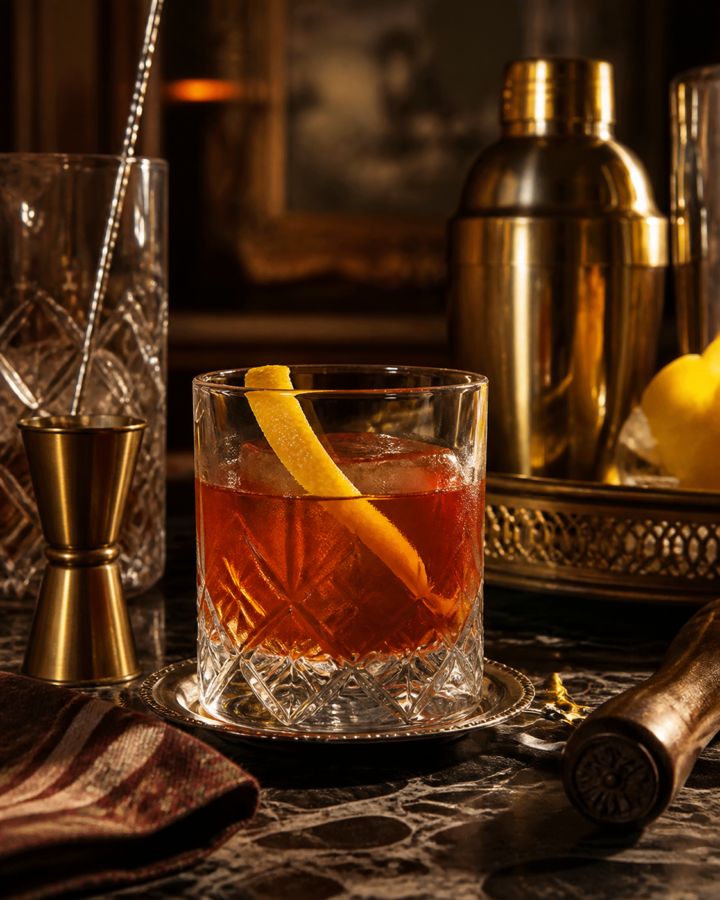
The sazerac cocktail is a serious but remarkably simple drink: rye whiskey, sugar, Peychaud’s bitters, and a light coating of absinthe, finished with a lemon peel. Its flavor is aromatic, dry, gently sweet, and warming rather than fruity or creamy. If you enjoy cocktails that let the base spirit lead, this New Orleans classic is an excellent one to learn at home.
Despite its short ingredient list, technique matters. The glass should be properly chilled, the sugar fully dissolved, and the drink stirred rather than shaken. The result should feel smooth and concentrated, with enough dilution to make the whiskey inviting without washing out its character.
Sazerac cocktail ingredients
A traditional Sazerac does not require a long shopping list. Quality ingredients and careful proportions make a bigger difference than adding extra flavors.
- Rye whiskey: Rye gives the drink a spicy, dry backbone. Bourbon can be used if you prefer a rounder and sweeter profile.
- Peychaud’s bitters: These bitters provide the drink’s distinctive herbal, lightly anise-like aroma and red color. Angostura bitters can work in a pinch, although the flavor will be deeper and more intensely spiced.
- Absinthe: Only a small amount is needed to coat the glass. It contributes fragrance rather than making the drink taste strongly of licorice.
- Sugar: A small sugar cube or a measured bar spoon of simple syrup softens the whiskey and bitters.
- Lemon peel: The expressed oils add a fresh citrus aroma. The peel is usually used as a garnish rather than squeezed into the drink.
- Ice: Use fresh, solid ice for stirring and chilling. Avoid ice that has absorbed odors from the freezer.
A practical home measurement
For one serving, begin with 60 ml of rye whiskey, one small sugar cube or 5 ml of simple syrup, and three to four dashes of Peychaud’s bitters. You will also need a small splash of absinthe for the rinse. These proportions are a starting point, not a rigid rule. A sweeter whiskey may need less sugar, while a bold rye may benefit from a little more dilution.
How to make a Sazerac cocktail
- Chill the serving glass. Fill an old-fashioned glass with ice and water, or place it in the freezer while you prepare the drink.
- Prepare the sugar. Add the sugar cube and bitters to a mixing glass. Crush the cube gently with a muddler, then add a small splash of water if needed. If using simple syrup, combine it directly with the bitters.
- Add the whiskey. Pour in the rye and fill the mixing glass with ice.
- Stir until chilled. Stir steadily for about 20 to 30 seconds. This cools the mixture and adds the right amount of water without creating the frothy texture associated with shaking.
- Rinse the glass. Discard the ice and water from the serving glass. Add a small splash of absinthe, rotate the glass to coat the inside, and discard the excess. Do not pour in a large measure; the rinse is intended to perfume the drink.
- Strain and garnish. Strain the whiskey mixture into the rinsed glass, usually without ice. Express a strip of lemon peel over the surface to release its oils, then place it on the rim or discard it according to your preference.
The finished drink should be cold and silky, with a clear amber appearance. It should smell of lemon and anise before the first sip, followed by rye spice, bitters, and a restrained sweetness.
Why the glass rinse matters
The absinthe rinse is one of the defining details of the Sazerac method. It creates an aromatic layer that reaches the nose before the whiskey does. If you are new to absinthe, start with a very small amount. Too much can dominate the cocktail and hide the balance of the rye, sugar, and bitters.
How to balance the flavor
A well-made Sazerac is not meant to taste like a sweet whiskey drink. It is compact, dry-leaning, and spirit-forward. If the cocktail tastes harsh, the first solution is usually better chilling and dilution rather than immediately adding more sugar. Stir it a little longer with fresh ice and taste again.
If it tastes too sharp or hot, add a small amount of syrup. If it feels flat, check the bitters and lemon oils; both provide important aromatic lift. A heavy-handed absinthe rinse can make the drink taste medicinal, while too little may leave it lacking the classic herbal perfume.
Glassware also affects the experience. A small old-fashioned glass works well because it concentrates the aroma and keeps the serving compact. Serving the drink up, without ice, is traditional in many versions. If you prefer a slower drink or live in a warm climate, one large ice cube is a practical alternative.
Sazerac variations and useful substitutions
Rye is the classic choice, but bourbon creates a softer and more caramel-led variation. Some drinkers split the whiskey between rye and bourbon for a middle ground. If Peychaud’s bitters are unavailable, Angostura can be substituted, though the result becomes darker, more bitter, and less floral.
Simple syrup is convenient because it blends instantly. A sugar cube offers a more traditional preparation, but it must be crushed thoroughly so that no gritty crystals remain. For a slightly more citrus-forward version, express the lemon peel generously while keeping lemon juice out of the glass. Juice changes the drink’s structure and moves it away from the classic style.
The Sazerac is very different from refreshing long drinks such as a bright Paloma cocktail, or creamy dessert-style serves like this classic Mudslide drink. For another compact, citrus-led option, compare it with a balanced Lemon Drop Martini.
The character and background of the Sazerac
The Sazerac is closely associated with New Orleans and is widely regarded as one of the city’s signature cocktails. Its history includes changing spirits and evolving preparation methods, which is why modern recipes may differ over whether rye, cognac, or a combination should lead the drink. You can explore the broader background and historical discussion on the Sazerac Wikipedia page.
Rather than treating one variation as the only correct version, focus on the drink’s central structure: a strong base spirit, aromatic bitters, a touch of sugar, and a fragrant rinse. That framework is what makes the cocktail recognizable and adaptable.
Serving tips for a better homemade drink
- Use a fresh lemon and peel only the colored outer skin, avoiding too much of the bitter white pith.
- Keep the absinthe bottle away from the pour spout when rinsing so you can control the small quantity.
- Stir with plenty of ice, but strain promptly once the drink is cold.
- Taste your whiskey on its own before choosing the amount of sugar.
- Serve the cocktail soon after preparation, while the citrus and absinthe aromas are still vivid.
The Sazerac rewards patience more than complexity. Once you learn to control dilution, sweetness, and the absinthe rinse, you can produce a polished cocktail with only a few ingredients. Enjoy it slowly and responsibly, especially because its compact size can conceal the strength of the whiskey.