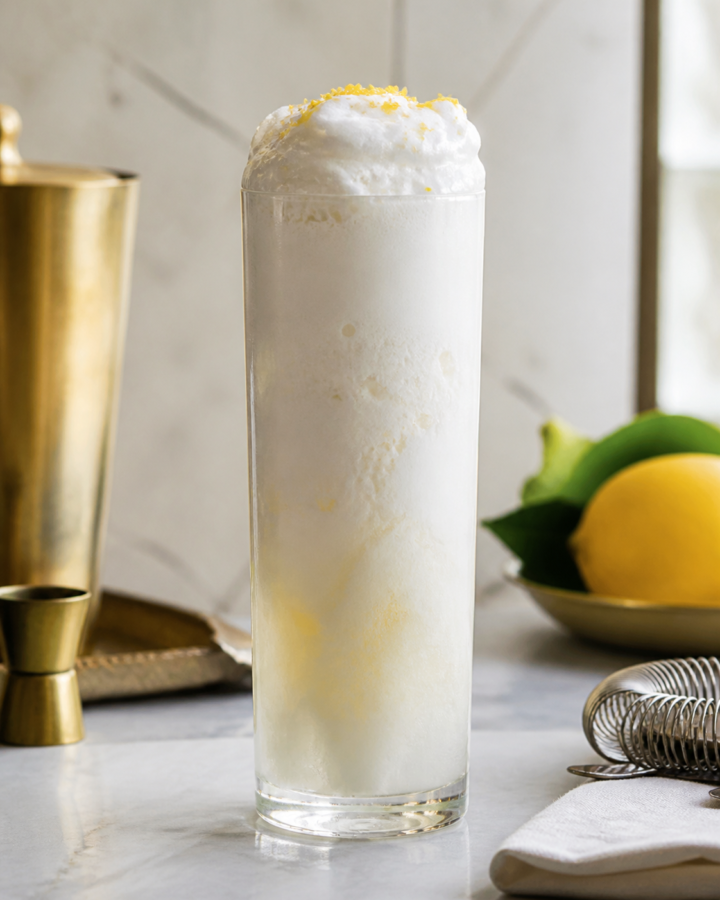
The Ramos Gin Fizz is one of the most distinctive classic gin cocktails: creamy but bright, rich yet refreshing, and topped with a cloud of fine foam. Made with gin, citrus juice, cream, egg white, sugar, orange flower water, and soda, it rewards patience more than complicated equipment. The key is creating a stable, silky texture without allowing the drink to become heavy or overly sweet.
Although it looks like a special-occasion drink, you can make a very good version at home with a shaker, fresh ingredients, and a little attention to technique. This guide explains what goes into the cocktail, how to shake it properly, and how to adjust the recipe while preserving its signature character.
What makes a Ramos Gin Fizz different?
Many fizz cocktails combine a spirit, citrus, sugar, and soda. The Ramos Gin Fizz goes further by adding cream, egg white, and orange flower water. These ingredients give it a soft, almost meringue-like foam and a rounded mouthfeel that sets it apart from a simple gin highball.
The drink should taste balanced rather than dessert-like. Fresh lemon brings sharpness, lime adds a more aromatic acidity, and orange flower water contributes a delicate floral note. Cream smooths the edges, while soda lifts the finished cocktail and keeps it refreshing.
It belongs to the wider family of fizz cocktails, but its unusually creamy texture and demanding shaking method have made it especially memorable. If you enjoy crisp, citrus-led gin drinks, you may also like this bright Tom Collins recipe.
Ramos Gin Fizz ingredients
This recipe makes one tall drink:
- 60 ml gin
- 15 ml fresh lemon juice
- 15 ml fresh lime juice
- 20 ml simple syrup
- 15 ml heavy cream or single cream
- 1 small egg white
- 2 to 3 drops orange flower water
- 30 to 60 ml chilled soda water, or enough to top
- Ice
A London dry gin works well because its juniper character can stand up to the citrus and cream. A softer or more floral gin will produce a gentler drink, so choose according to your preference. Freshly squeezed juice is important: bottled citrus can taste flat or harsh, especially in a cocktail with so few ingredients.
Choosing the right sweetener
Simple syrup is the easiest option because it blends evenly into the cold mixture. Make it by combining equal parts sugar and water, stirring until dissolved, and cooling it before use. If you prefer a slightly richer texture, use a two-to-one sugar syrup, but reduce the amount added so the cocktail does not become cloying.
Handling orange flower water
Orange flower water is powerful. Start with only two or three drops, then increase very cautiously if needed. Too much can make the drink smell medicinal or perfumed. It should sit quietly behind the citrus and cream, not dominate them.
How to make a Ramos Gin Fizz
- Combine the ingredients. Add the gin, lemon juice, lime juice, syrup, cream, egg white, and orange flower water to a shaker. Do not add ice yet.
- Shake without ice. Shake hard for about 15 to 20 seconds. This dry shake helps emulsify the egg white and cream, creating the foundation for the foam.
- Add ice and shake again. Fill the shaker with ice and shake vigorously for another 15 to 20 seconds. The second shake chills and dilutes the drink while strengthening the texture.
- Strain into a tall glass. Strain into a chilled Collins or highball glass. A fine strainer can help remove small pieces of ice and produce a smoother finish.
- Top slowly with soda. Add chilled soda water gradually. The foam may rise above the rim, so pour carefully and pause if necessary.
The finished cocktail should be cold, lightly effervescent, and creamy without feeling thick. Its aroma should be citrus-forward with a subtle floral accent. Serve it immediately, while the foam is at its highest and the soda is lively.
Tips for getting the texture right
The biggest challenge is foam. A weak shake can leave the drink thin, while overfilling a small shaker can make vigorous shaking difficult. Use a large shaker with plenty of room for the ingredients to move. If your shaker is narrow or your hands tire quickly, shake in two shorter bursts during each stage.
Egg white performs best when it is fresh and kept cold. If you are uncomfortable using raw egg, pasteurised egg white is a practical alternative. It may produce a slightly different texture, but it can still create a pleasing foam.
Do not rush the soda step. Pouring it too quickly can collapse the foam or cause the drink to overflow. A gentle, slow pour gives the bubbles time to integrate with the creamy mixture. If the foam seems too dense, a small amount of extra soda can loosen it.
- Use a freshly chilled glass to keep the drink cold for longer.
- Measure the citrus carefully; too much juice can overpower the gin.
- Shake with real energy, especially after adding ice.
- Use a restrained amount of orange flower water.
- Serve as soon as the cocktail is topped with soda.
Common mistakes and easy fixes
The drink tastes too sour
Citrus strength varies from fruit to fruit. If the cocktail is too sharp, add a small amount of syrup rather than extra cream. Sweetness will correct the acidity more effectively while keeping the drink’s structure intact.
The cocktail is too sweet or heavy
Reduce the syrup slightly and make sure the soda is cold and fresh. A gin with a dry, juniper-led profile can also restore balance. Avoid adding more citrus all at once, since that may make the drink both sour and thin.
The foam disappears quickly
This usually points to insufficient shaking, warm ingredients, or too much soda. Try a longer dry shake, use cold cream and egg white, and top the drink gradually. The foam will naturally settle over time, so presentation and serving speed matter.
Serving ideas and variations
A Ramos Gin Fizz is best served on its own as a brunch cocktail, aperitif, or leisurely evening drink. Its creamy texture pairs well with light savoury foods, fresh fruit, mild cheeses, and delicate pastries. Avoid strongly spiced or very sweet dishes that can overwhelm its citrus and floral notes.
For a more aromatic version, use a floral gin and keep the orange flower water especially restrained. For a drier drink, reduce the syrup and increase the soda slightly. You can also experiment with the balance of lemon and lime, but keeping both juices gives the cocktail its characteristic layered acidity.
If you prefer a simpler long drink, compare the technique with this gin and tonic with Aviation Gin. For another spirit-forward option with floral character, try this Gin Aviation recipe.
Final thoughts
The Ramos Gin Fizz is not difficult because its ingredients are rare; it is challenging because texture and balance depend on careful preparation. Fresh citrus, measured sweetness, restrained orange flower water, and a vigorous two-stage shake make the greatest difference. Once you understand those steps, the cocktail becomes far more approachable—and the result is a luxurious, refreshing gin drink that feels genuinely special.